
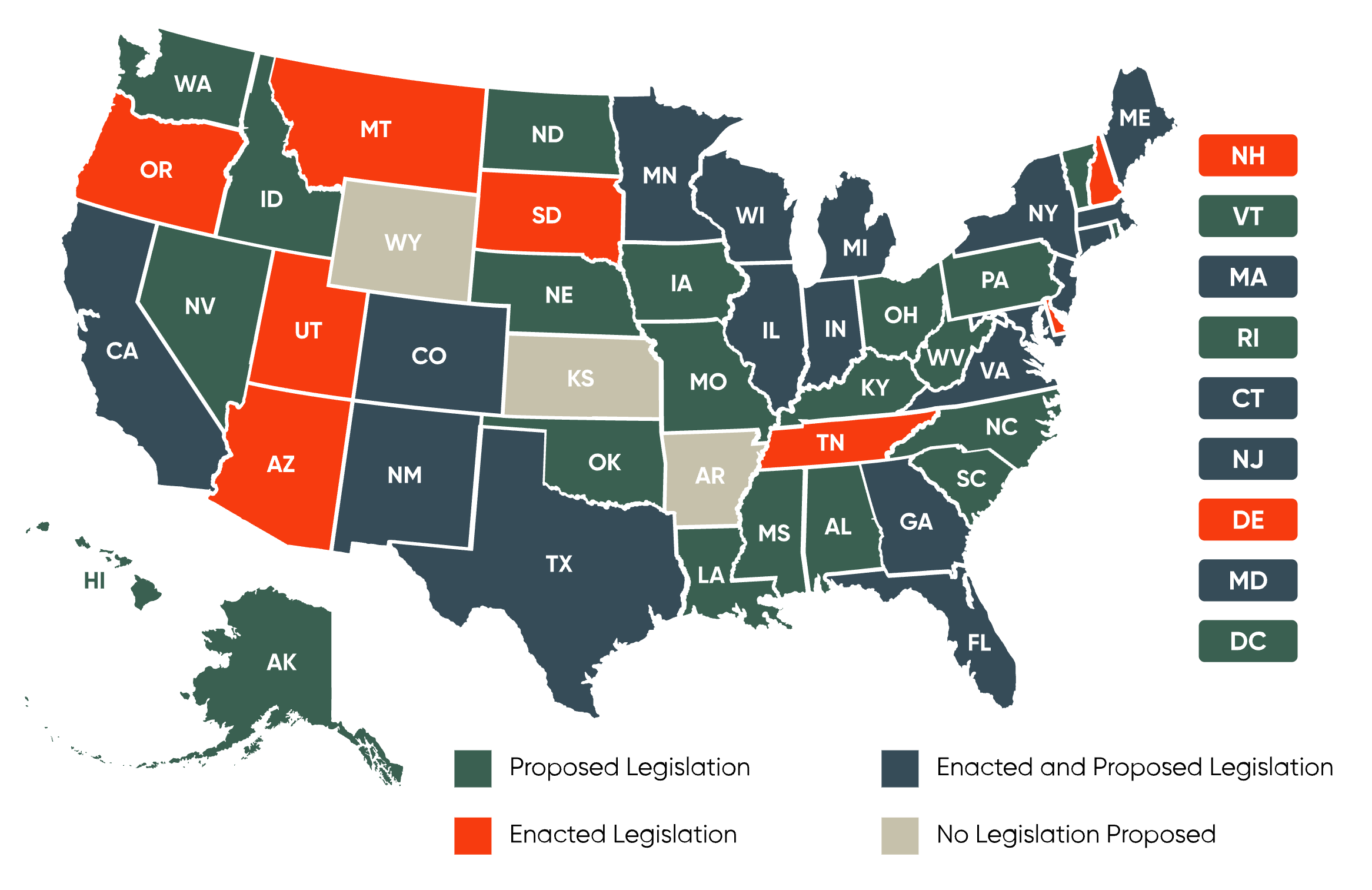
By seeking to block U.S. states from regulating artificial intelligence without offering a protective federal framework in return, CeSIA believes Donald Trump is making an irresponsible decision that exposes citizens to the growing risks of this technology.
On Thursday, December 11, the U.S. President signed an executive order granting the federal government broad powers to challenge and weaken state-level AI regulations, citing the need for U.S. competitiveness and “global dominance” in the field.
“This order is a deeply dangerous maneuver: it removes the only existing protections against AI abuses and threats without establishing a single federal guardrail. By bypassing Congress following the near-unanimous rejection of a similar bill, Donald Trump is confirming his intent to govern for a handful of tech companies at the expense of the public interest,” says Charbel-Raphaël Ségerie, Executive Director of the French Center for AI Safety (CeSIA).
CeSIA notes that no federal AI regulation currently exists in the United States, as the only standing order—adopted by Joe Biden—was revoked by Donald Trump mere hours after his inauguration. By neutralizing state laws, which currently serve as the only line of defense against risky AI development and usage, the Trump administration is knowingly engineering a regulatory vacuum. While federal harmonization of the legal framework is desirable in principle, it must never be implemented before replacing existing protections with standards that are at least equivalent regarding safety, transparency, and citizen protection.
This decree follows the resounding failure of a similar legislative attempt, rejected 99 votes to 1 in the Senate last July—a vote that highlighted rare bipartisan opposition to AI deregulation. Republicans and Democrats alike, including several influential conservative figures, are denouncing this new attempt to strip states of their authority without any safety guarantees.
By using an executive order—a route many experts consider legally fragile—the administration is effectively aligning itself with demands driven by Big Tech and their investors, at the cost of growing political isolation. Meanwhile, a large majority of American citizens are in favor of much stricter AI oversight.
This decision comes as AI-related harms are accumulating rapidly: automated scams, information manipulation and disinformation, deepfakes aimed at deceiving voters during elections, and damage to minors' mental health. In the short to medium term, many experts warn of more grave and systemic threats, such as an explosion in cybercrime, lowered technological barriers for creating weapons of mass destruction, and even the risk of losing control over increasingly autonomous AI systems.
Simultaneously, tech companies are waging a campaign to weaken European AI regulation, pressuring the Commission to amend or delay key obligations of the AI Act.


